Characterizing the Facial EMG Signal
While surface electromyography of facial muscles presents a deceptively simple methodology for non-invasive silent speech decoding, the signal that emerges represents the endpoint of a remarkably complex transduction chain. Its interpretation demands appreciation of neuroanatomy, synaptic physiology, volume conductor theory, and stochastic signal processing.
This piece represents a consolidation of my reading on the matter, tracing the complete efferent pathway from primary motor cortex to the motor endplate, examining the biophysics of signal generation and propagation, and addressing questions that often go unexamined.
Corticobulbar origins and the facial motor nucleus
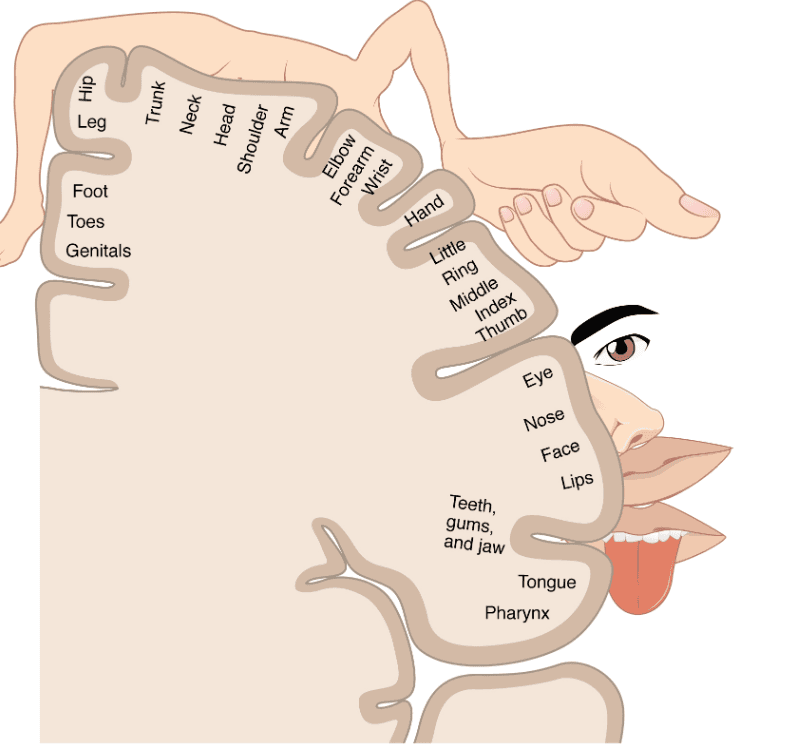
Volitional facial movements originate in the lateral precentral gyrus, with the face representation situated approximately 2 cm lateral to the hand area along the motor homunculus (Pilurzi et al., 2013).
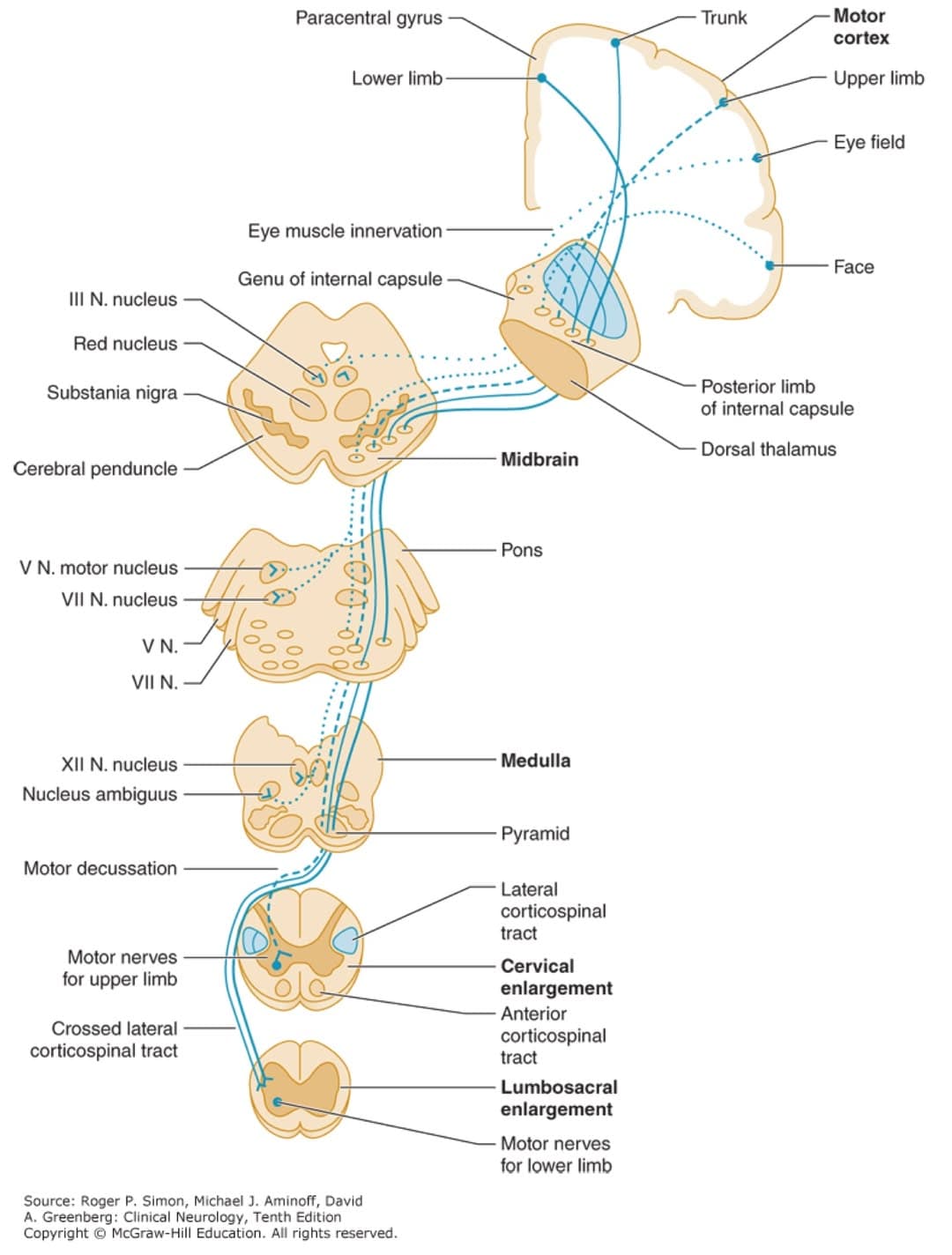
Unlike the corticospinal system, these upper motor neurons project via the corticobulbar tract, descending through the corona radiata to transit the genu of the internal capsule, so named for its position at the "knee" between anterior and posterior limbs, before continuing through the cerebral peduncle to reach brainstem motor nuclei (Mtui et al., 2021).
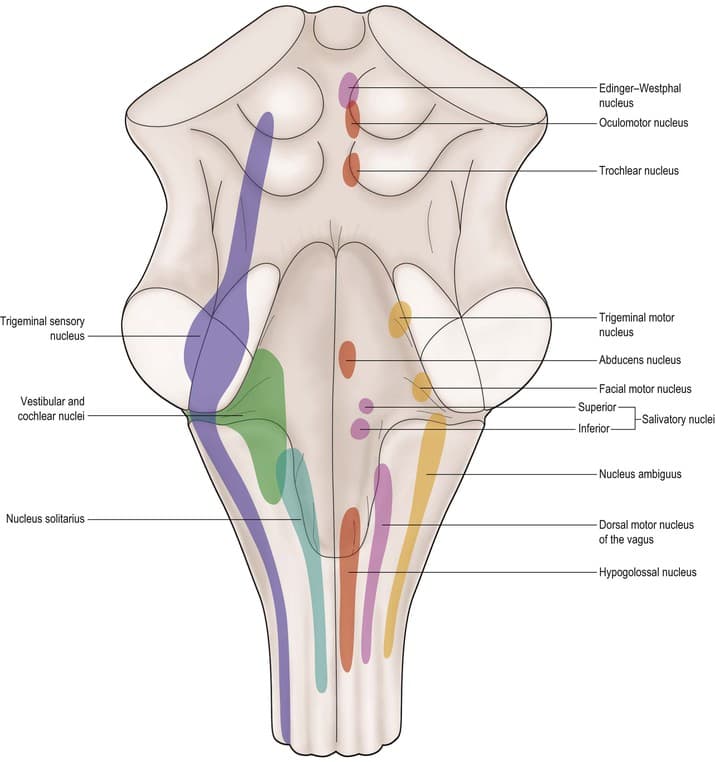
The facial motor nucleus, containing approximately 10,000 lower motor neurons in the caudal ventrolateral pontine tegmentum, displays a somatotopic organisation (Valls-Solé, 2017). The dorsal subnucleus (innervating upper facial musculature: frontalis, superior orbicularis oculi) receives bilateral corticobulbar input, while the lateral subnucleus (innervating lower facial musculature: orbicularis oris, zygomaticus, platysma) receives predominantly contralateral projections. This differential innervation pattern accounts for the preservation of forehead movement in upper motor neuron lesions, where bilateral cortical input to the dorsal subnucleus provides redundancy, while lower facial paralysis occurs contralateral to the lesion. Peripheral facial nerve lesions, by contrast, produce ipsilateral paralysis of the entire hemiface regardless of upper/lower distinction, as all motor axons traverse the common final pathway.
The intrapontine trajectory of facial motor axons deserves attention for its unusual course. Rather than exiting directly, fibres loop dorsomedially around the abducens nucleus before curving ventrolaterally to exit the pontomedullary junction.
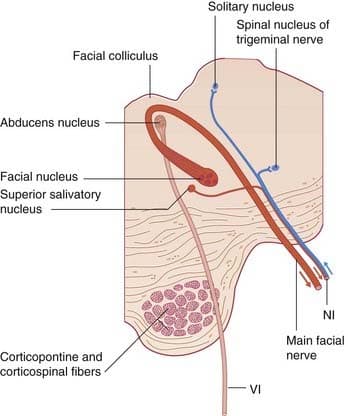
This internal genu creates the facial colliculus visible on the rhomboid fossa floor. The nerve then traverses the cerebellopontine angle (a common site of acoustic neuroma compression), enters the internal acoustic meatus alongside CN VIII, and courses through the facial canal of the petrous temporal bone before emerging at the stylomastoid foramen. Extracranially, approximately 7,000 myelinated motor fibres distribute via five terminal branches (temporal, zygomatic, buccal, marginal mandibular, cervical) to innervate the mimetic musculature (Dulak & Naqvi, 2023).
The innervation ratios of facial muscles are remarkably low compared to limb musculature. While gastrocnemius motor units may encompass 1,000-2,000 muscle fibres, facial muscles contain motor units with substantially fewer fibres per axon (Valls-Solé, 2017). Motor unit number estimation (MUNE) studies of the dilator naris, admittedly an extreme case, suggest only 75-187 motor units comprising the entire muscle (Cattaneo & Pavesi, 2014). This fine-grained motor unit architecture enables the precisely graded contractions required for facial expression, where the difference between a genuine and forced smile may involve submillimetre differences in skin displacement.
Neuromuscular transmission
The neuromuscular junction converts presynaptic action potentials into postsynaptic muscle fibre activation through a sequence of events whose temporal characteristics directly influence the EMG signal we ultimately record. The timing parameters of these kinetics constrain the temporal resolution of the motor system and shape the resulting MUAP waveforms.
When the action potential invades the motor nerve terminal, depolarisation activates voltage-gated Ca²⁺ channels, predominantly P/Q-type (Cav2.1) at mammalian neuromuscular junctions.

Bhagat and Bhardwaj (Bhagat & Bhardwaj, 2024) emphasise that calcium influx triggers vesicle fusion within approximately 0.3 μs of channel opening, an extraordinarily tight coupling that ensures synchronous release. The active zone contains a population of docked vesicles primed for immediate release, with each vesicle containing 5,000-10,000 acetylcholine molecules. A single presynaptic action potential triggers exocytosis of 100-200 vesicles (the quantal content), releasing on the order of 10⁶ ACh molecules into the synaptic cleft.
The cleft itself spans merely 50 nm, sufficiently narrow that transmitter diffusion occurs within microseconds. Nicotinic acetylcholine receptors, concentrated at approximately 10,000/μm² on the postsynaptic membrane, are pentameric ligand-gated cation channels requiring two ACh molecules for activation (Roper, 2023). The junctional folds of the motor endplate, deep invaginations of the postsynaptic membrane, serve both to increase receptor density and to concentrate voltage-gated Na⁺ channels (Nav1.4) at the fold depths, ensuring reliable action potential initiation.
The aggregate postsynaptic response, the end-plate potential (EPP), typically reaches 50-70 mV amplitude, vastly exceeding the ~15-25 mV depolarisation required to reach threshold for muscle fibre action potential generation. This safety factor of 3-5× ensures 1:1 transmission fidelity under normal physiological conditions; failure only occurs pathologically (myasthenia gravis, Lambert-Eaton syndrome) or during high-frequency stimulation protocols that deplete the readily releasable vesicle pool.
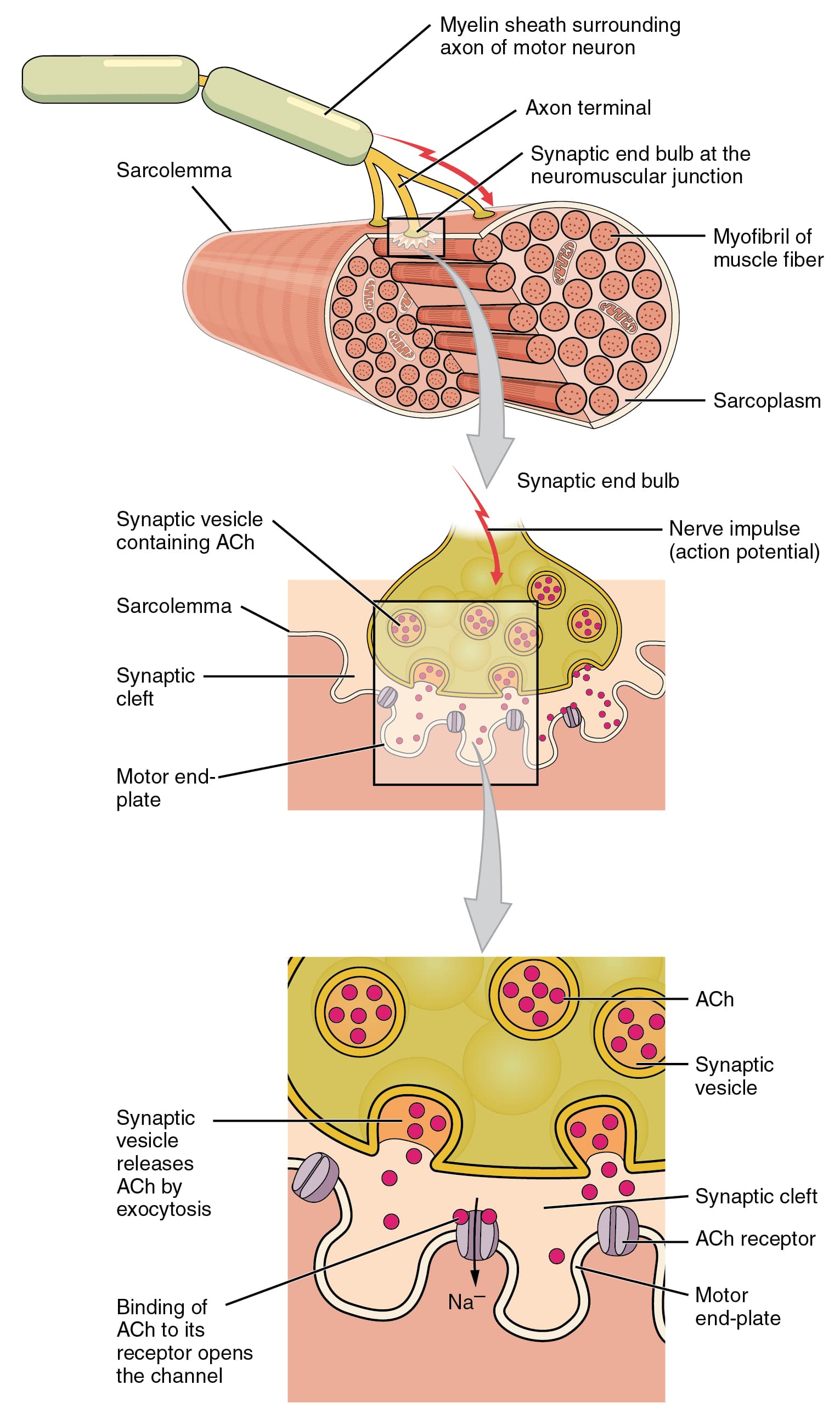
The total synaptic delay, from presynaptic action potential to postsynaptic action potential initiation, spans approximately 0.5-0.75 ms at mammalian neuromuscular junctions at physiological temperature. The EPP itself persists for roughly 10 ms as acetylcholinesterase hydrolyses ACh (turnover: ~10,000 molecules/enzyme/second), terminating transmission and recycling choline for presynaptic reuptake via high-affinity choline transporters.
Muscle fibre action potential generation and propagation
The muscle fibre action potential initiated at the endplate propagates bidirectionally along the sarcolemma at approximately 3-5 m/s, roughly an order of magnitude slower than motor nerve conduction velocities of 40-60 m/s (De Luca, 2006). This propagation velocity, termed muscle fibre conduction velocity (MFCV), is a critical parameter for EMG signal interpretation as it determines the spatial extent of the depolarisation wavefront and, through Fourier relationships, influences the frequency content of the detected signal.
The relationship between MFCV and fibre diameter is approximately linear and has been quantified empirically across neuromuscular disorders (Blijham et al., 2006):
MFCV (m/s) ≈ 0.043 × fibre diameter (μm) + 0.83
This relationship arises from cable theory. Larger fibres present lower internal resistance to longitudinal current flow, permitting faster propagation. Type II (fast-twitch) fibres, being larger than Type I fibres, exhibit faster conduction velocities, a finding with direct implications for EMG spectral content, as we shall see.
The action potential duration in skeletal muscle fibres spans approximately 2-4 ms (substantially longer than neuronal action potentials of ~1 ms), reflecting the kinetics of muscle-specific Nav1.4 channels and the contribution of Cl⁻ conductance to repolarisation. As the depolarisation wave traverses the fibre, it generates an electromagnetic field in the surrounding volume conductor. It is this field, not the membrane potential itself, that surface electrodes transduce.
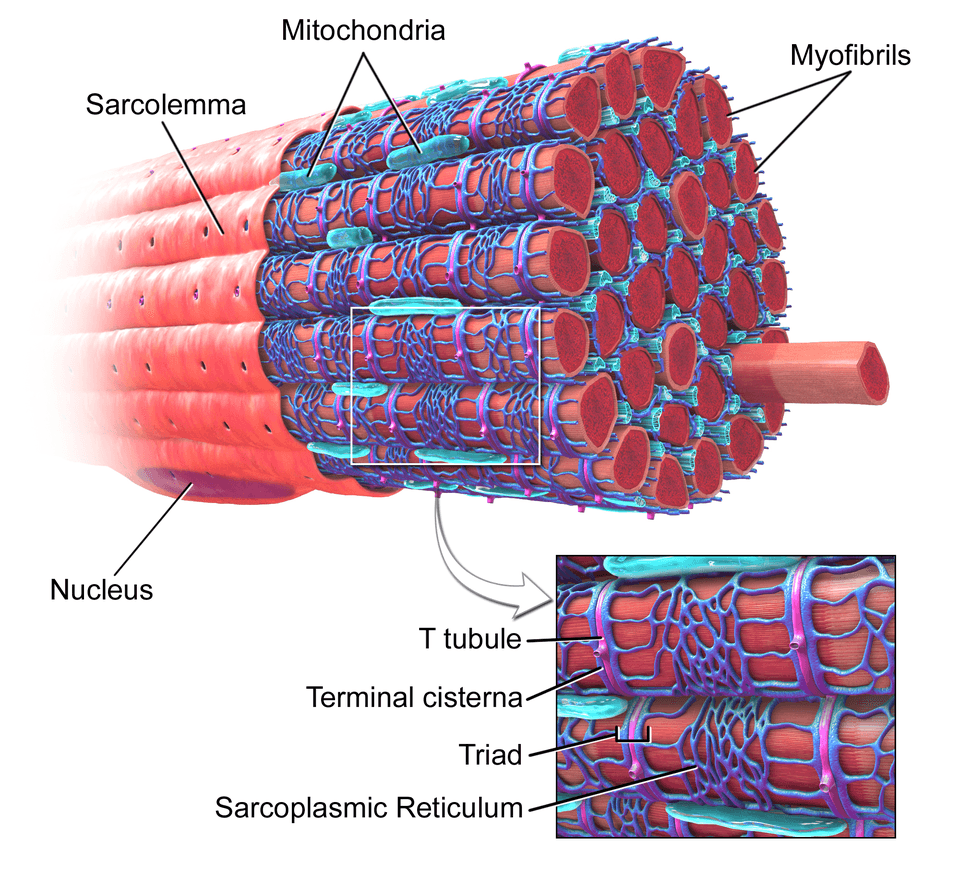
Critically, the action potential also propagates radially into the T-tubule system, triggering Ca²⁺ release from the sarcoplasmic reticulum via the ryanodine receptor (RyR1) coupled to the dihydropyridine receptor (DHPR/Cav1.1) voltage sensor. This excitation-contraction coupling occurs with a delay of approximately 2-3 ms from surface depolarisation to peak Ca²⁺ release, initiating cross-bridge cycling and force generation. While the mechanical twitch response (time-to-peak: 20-100 ms depending on fibre type) is far too slow to track individual action potentials, the electrical events preceding it are faithfully represented in the EMG signal.
Anatomical peculiarities of facial musculature
Before examining the electrode's perspective, several anatomical features distinguishing facial from limb muscles require discussion, as each directly influences sEMG signal characteristics. I examine these because they are relevant to the spectral characteristics of facial EMG as we shall later discover.
Myocutaneous insertion
Facial muscles insert directly into the dermis via specialised myocutaneous junctions rather than into bone via tendons (Nguyen & Duong, 2023). The zygomaticus major, for instance, originates from the zygomatic bone but terminates by interlacing with the dermis and subcutaneous tissue at the oral commissure. This architecture exists because facial muscles function to deform skin, creating the folds, dimples, and wrinkles constituting facial expression, rather than to rotate skeletal elements about joints. When you smile, zygomaticus major does not rotate a bone; it pulls the corner of your mouth upward and laterally, mechanically deforming your skin. The practical consequence for sEMG is that the electrode sits in close mechanical and electrical proximity to active contractile tissue, with minimal intervening passive connective tissue.
Absent fascial compartmentalisation
Unlike limb muscles ensheathed in distinct fascial layers, facial muscles lack well-defined fascial boundaries and frequently interdigitate with adjacent muscles. The modiolus, the fibromuscular node at the oral commissure where multiple muscles converge, exemplifies this anatomical complexity. For sEMG, this organisation creates substantial crosstalk: activity in the zygomaticus major may contaminate recordings intended to isolate the orbicularis oris or levator anguli oris. Lapatki and colleagues (Lapatki et al., 2010) identified crosstalk as a significant methodological limitation in 12% of facial EMG publications they reviewed.
Diffuse motor endplate distribution
Whereas limb muscles typically concentrate neuromuscular junctions in a discrete transverse band (the motor point or innervation zone), facial muscles distribute endplates diffusely throughout the muscle volume (Nguyen & Duong, 2023). This pattern arises from the complex architecture of facial muscles, containing short fibres of varying lengths, multiple motor nerve entry points, and sheet-like or sphincteric arrangements rather than parallel-fibred fusiform organisation. For sEMG methodology, the implication is that standard guidance regarding electrode placement relative to the innervation zone (to optimise MUAP waveform morphology) applies imperfectly to facial recordings. The classical biphasic MUAP shape assumes a wave propagating away from a localised endplate; diffuse endplates produce more complex, polyphasic waveforms even in healthy muscle. This is a pattern that might suggest pathology in limb muscles but is normal in facial muscles.
Absent muscle spindles
Perhaps most remarkably, facial muscles of expression largely lack muscle spindles, the proprioceptive receptors that provide length and velocity feedback in limb musculature (Nguyen & Duong, 2023). The stretch reflex simply does not exist for the frontalis or zygomaticus. Alternative mechanoreceptive feedback originates from cutaneous receptors in facial skin, innervated by the trigeminal nerve, which detect skin stretch and deformation resulting from muscle contraction rather than muscle length per se. This sensory arrangement presumably reflects the functional demands of the system: facial expressions require achieving particular skin configurations for social communication, not particular muscle lengths for postural control. You have no direct proprioceptive sense of how raised your eyebrow is or how wide your smile has become. You infer facial configuration from skin sensation and, frankly, from social feedback. This is why patients recovering from facial nerve palsy often train with mirrors; they cannot feel their face in the way they can feel their limbs. The masticatory muscles (masseter, temporalis, pterygoids), which do move a skeletal element (the mandible) through a joint (TMJ) and require precise force regulation, retain spindle populations.
Small fibre diameter and motor unit characteristics
Facial muscles exhibit smaller muscle fibre cross-sectional areas than most limb muscles. Freilinger and colleagues (Freilinger et al., 1990) demonstrated systematic variation: the frontalis, orbicularis oris, and orbicularis oculi contain fibres with cross-sectional areas below 400 μm², while zygomaticus major, depressor anguli oris, and buccinator contain intermediate fibres (400-500 μm²). Contrast this with limb muscles where fibre areas commonly exceed 500-1000+ μm². Given the linear relationship between fibre diameter and conduction velocity, this anatomical difference has direct consequences for MUAP morphology and spectral content.
Facial motor units are also composed predominantly of fast-twitch fibres (for instance, the orbicularis oculi and zygomaticus major are among the fastest-moving muscles in the human body (Nguyen & Duong, 2023)) and show higher typical firing rates during recruitment (~25 Hz) compared to limb muscles (~10-11 Hz) (Boxtel, 2001) (Daube & Rubin, 2023). These characteristics influence both the temporal structure and spectral properties of the resulting sEMG signal.
What the electrode transduces
Surface electrodes do not record transmembrane potentials. They record extracellular field potentials generated by current flow in the volume conductor surrounding active muscle fibres. When an action potential propagates along a muscle fibre, it creates a triphasic current source-sink distribution. Current flows outward (source) ahead of the depolarisation wavefront, inward (sink) at the site of depolarisation, and outward again behind the repolarising membrane. This moving tripole generates a time-varying potential field throughout the surrounding tissue.
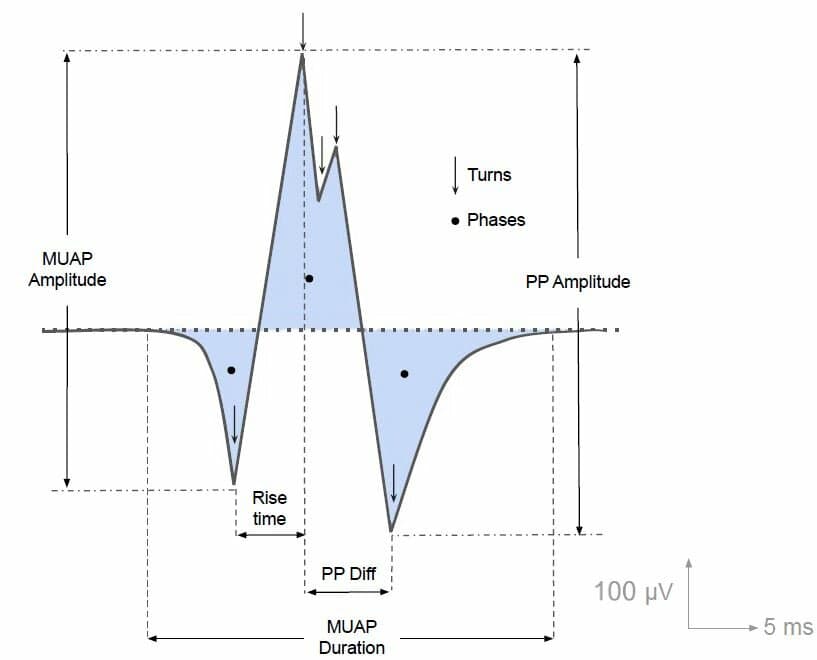
The fundamental unit of the surface EMG signal is the motor unit action potential (MUAP), the compound potential resulting from the temporal and spatial summation of single-fibre action potentials from all muscle fibres belonging to one motor unit firing near-simultaneously. Because the fibres of a motor unit are spatially distributed within the muscle (motor unit territory typically spans 5-10 mm in adults), and because action potentials initiate at the endplate and propagate bidirectionally, the individual fibre contributions arrive at the electrode with varying phases and amplitudes. Their superposition produces a characteristic waveform typically 8-14 ms in duration with biphasic or triphasic morphology, though considerable morphological variation exists depending on electrode-motor unit geometry (Pino et al., 2008).
The signal actually recorded by surface electrodes is the interference pattern, the algebraic summation of all MUAPs from all active motor units within the electrode's detection volume. This volume extends approximately 10-12 mm from the electrode surface, with contributions from deeper motor units attenuated by the intervening tissue (De Luca, 2006). At low force levels, when few motor units are active, individual MUAPs may be discernible in the raw trace as discrete biphasic deflections separated by isoelectric baseline. As force increases through progressive motor unit recruitment and rate coding, the signal becomes increasingly dense until, at moderate to high contraction levels, individual MUAPs become indistinguishable.
At high contraction levels, a profound statistical regularity emerges: the amplitude distribution of the EMG signal converges toward Gaussian. This is not metaphorical. It follows directly from the central limit theorem. Each motor unit fires according to its own stochastic point process, approximately independent of neighbouring units, at rates that drift relative to each other (i.e., no phase-locking or synchronisation under normal conditions). The instantaneous voltage at the electrode is the sum of contributions from N active motor units, each contributing its MUAP waveform offset by its own firing time:
V(t) = Σᵢ MUAPᵢ(t - tᵢ)
As N increases and the sources remain asynchronous, the amplitude distribution necessarily approaches Gaussian regardless of the individual MUAP shapes. The central limit theorem guarantees this for sums of independent random variables.
The EMG signal at high force levels is, in the rigorous signal-processing sense, structured noise, meaning a random process with definable statistical properties (amplitude distribution, power spectrum, autocorrelation) but without deterministic temporal structure. This has methodological implications. Amplitude measures (RMS, integrated EMG, average rectified value) become the appropriate metrics, as individual MUAP identification becomes impossible. The signal looks like noise because it is noise. It is the superposition of many independent stochastic processes, but it is noise that carries information in its statistical properties.
Firing rate versus signal bandwidth
Alas, we arrive at the central puzzle. Motor units during sustained contractions typically fire at 8-25 Hz, with facial muscles at the higher end of this range. Yet surface EMG signals contain substantial spectral power extending to 400-500 Hz, with median frequencies often in the 80-150 Hz range for limb muscles and 40-80 Hz for facial muscles (Boxtel, 2001). How does a 20 Hz neural firing rate produce a 100 Hz median frequency in the output signal?
The resolution requires distinguishing between two quantities that share the same units (Hz) but represent fundamentally different things:
Motor unit firing rate is how many times per second a motor neuron discharges an action potential. It is a repetition rate, a count of discrete events per unit time. A motor unit firing at 20 Hz produces one action potential every 50 ms. This is constrained by neuronal refractory periods, metabolic limitations, and the control strategies of the motor system. No motor unit fires at 200 Hz; the membrane biophysics simply do not permit it.
Signal bandwidth refers to the range of frequencies present in the power spectrum of the recorded EMG signal. When we say the EMG has power extending to 500 Hz, we mean that the Fourier transform of the voltage trace contains non-zero spectral energy at 500 Hz. This is a property of the signal's waveform shape, not a count of events.
The Fourier relationship between duration and bandwidth
The fundamental principle is this: a signal's duration in time and its extent in frequency are inversely related. This is a mathematical property of the Fourier transform that applies to any signal.
A signal that is sharply localised in time (brief, transient) must be broadly spread in frequency (wideband). A signal that is extended in time (long, sustained) is narrowly spread in frequency (narrowband). For a pulse of duration τ, the frequency content extends to approximately 1/τ (the Rayleigh bandwidth). A 10 ms pulse contains frequency components extending to roughly 100 Hz. A 1 ms pulse contains components to roughly 1000 Hz. The sharper the edges, the higher the frequency content—because sharp transitions require high-frequency components to construct.
Applying this to MUAPs
A motor unit action potential is a brief electromagnetic event lasting approximately 5-15 ms, with a characteristic biphasic or triphasic waveform featuring relatively sharp rising and falling edges. Consider a typical MUAP of 10 ms total duration.
The Fourier transform of this single, isolated MUAP contains frequency components determined entirely by the waveform's shape:
- The overall duration (~10 ms) sets the fundamental bandwidth (~100 Hz)
- The sharp rising edge (perhaps 1-2 ms rise time) contributes components to 500-1000 Hz
- The triphasic morphology creates specific spectral structure
This is the frequency content of one MUAP, considered in isolation. It has nothing to do with how often MUAPs occur. A single MUAP, never repeated, still contains frequencies up to several hundred Hz because of its brief duration and sharp transitions.
Trains of MUAPs and the interference pattern
When a motor unit fires repeatedly at 20 Hz, it produces a train of MUAPs spaced 50 ms apart. For a perfectly periodic train of identical pulses, the power spectrum consists of discrete lines at the fundamental frequency and its harmonics: 20 Hz, 40 Hz, 60 Hz, 80 Hz, and so on. But critically, the amplitude of each harmonic is determined by the spectrum of the individual pulse. The harmonic lines are modulated by an envelope that is the Fourier transform of the single MUAP.
The firing rate determines where the spectral lines fall. The MUAP shape determines how tall each line is.
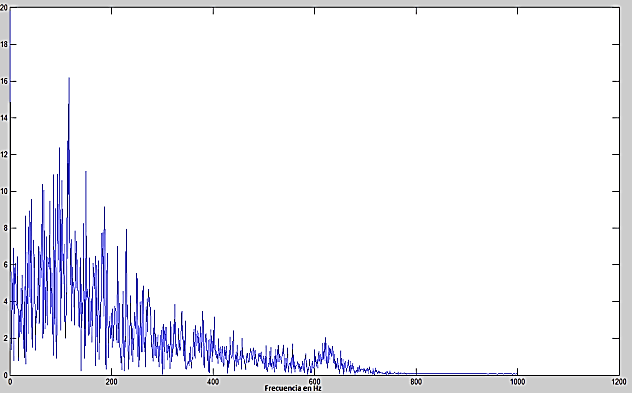
Real EMG introduces additional complexity. Motor units do not fire like perfect clocks; their inter-spike intervals show variability (coefficient of variation ~0.2-0.3), making the process stochastic rather than periodic. When you take the Fourier transform of an irregularly-timed pulse train, the discrete harmonic lines smear into a continuous spectrum. Add multiple motor units, each firing at its own rate (perhaps 18 Hz, 22 Hz, 25 Hz, 19 Hz), each with its own phase (completely asynchronous), and each contributing MUAPs of slightly different morpholog, and the sum produces a power spectrum that is continuous, shaped at low frequencies by firing rate statistics (a broad peak around 20-40 Hz reflecting mean firing rates), and shaped at high frequencies by MUAP morphology (the rolloff above 100-200 Hz reflects the spectral envelope of constituent MUAPs).
An analogy
Consider a drummer striking a cymbal 20 times per second. The rhythm occurs at 20 Hz. You perceive the regular temporal pattern, but each strike produces the cymbal's full acoustic spectrum extending to many kilohertz. The timbre (spectral content) of each strike is independent of the striking rate. Increasing the striking rate to 40 Hz doubles the number of acoustic events per second but does not alter the spectral content of each individual event. Similarly, each MUAP contains its complete spectral signature regardless of the inter-MUAP interval; firing rate determines event density, not event spectrum.
Why MUAP morphology dominates spectral content
Hermens and colleagues (Hermens et al., 1992) demonstrated through simulation that surface EMG median frequency is predominantly determined by MUAP shape parameters, particularly action potential conduction velocity (which affects MUAP duration through the velocity-duration relationship) and the spatial filtering properties of the volume conductor, while firing process parameters (mean rate, variability, synchronisation) exert comparatively marginal influence.
The dominant factor is muscle fibre conduction velocity (MFCV). Following is the causal chain:
- MFCV determines how quickly the action potential traverses the muscle fibre
- Faster conduction → the depolarisation wavefront is spatially shorter at any instant
- Shorter wavefront → briefer MUAP as the wave passes the electrode
- Briefer MUAP → broader frequency content (Fourier reciprocity)
- Broader frequency content → higher median/peak frequency
Conversely, during fatigue, MFCV drops as the membrane ionic environment changes (extracellular K⁺ accumulation, intracellular pH decrease, altered Na⁺/K⁺-ATPase activity). Slower conduction → temporally extended MUAP → lower bandwidth → spectral compression. This is why median frequency decline is a robust index of peripheral muscle fatigue—it reflects a physiological change in the muscle fibres themselves, not a change in central drive or firing patterns.
The linearity between MFCV and EMG mean power frequency has been confirmed experimentally (Arendt-Nielsen & Mills, 1985) (Sadoyama et al., 1983). During sustained contractions of the vastus lateralis, MFCV decreased by approximately 20%, with parallel decreases in spectral parameters. The correlation is strong enough that MFCV can be estimated from surface EMG spectral shifts, providing a non-invasive window into peripheral muscle physiology.
MUAP duration has two components
Dumitru and colleagues (Dumitru et al., 1999) showed that MUAP duration comprises two key subcomponents:
-
Near-field component is directly proportional to muscle fibre hemi-length (the distance from endplate to tendon). As the action potential propagates away from the endplate toward the tendon, it generates a potential that the electrode records. Longer fibres = longer propagation time = longer near-field component.
-
Far-field component is when the action potential encounters the musculotendinous junction and terminates, a far-field potential is generated that mirrors the intracellular action potential duration (~30 ms including slow repolarisation). This component is independent of fibre length.
Both components are inversely dependent on conduction velocity. This decomposition explains why MUAP duration varies with the muscle studied: muscles with longer fibres show longer MUAPs (longer near-field component), while muscles with smaller fibre diameters show longer MUAPs (slower conduction stretches both components).
Why facial sEMG shows lower peak frequencies than limb sEMG
We can now explain the second puzzle: why facial muscles exhibit peak spectral frequencies of 20-80 Hz while limb muscles peak at 50-150+ Hz, despite similar motor unit firing rates.
The primary driver
Facial expression muscles contain small-diameter fibres. Freilinger and colleagues (Freilinger et al., 1990) documented fibre cross-sectional areas below 400 μm² for frontalis, orbicularis oris, and orbicularis oculi, with intermediate values (400-500 μm²) for zygomaticus major and depressor anguli oris. Limb muscles commonly exceed these values substantially.
Given the linear relationship MFCV ≈ 0.043 × diameter + 0.83, smaller fibres conduct more slowly. Slower conduction velocity → longer MUAP duration → power concentrated at lower frequencies.
For context, tibialis anterior typically shows MFCV of 4-5 m/s (Kouyoumdjian & Graça, 2023). The masseter, a masticatory muscle with large powerful fibres optimised for bite force, shows MFCV of 10-12 m/s (Mito et al., 2000)—substantially faster, and correspondingly shows higher EMG spectral frequencies. Facial expression muscles, with their smaller fibres, would be expected to fall at the lower end of the MFCV range.
Partially offsetting factors
Several features of facial muscles might be expected to increase spectral frequency, partially offsetting the fibre diameter effect:
Short muscle fibres
Facial muscles are thin sheets with short fibres, not long fusiform bellies. Shorter fibres should produce shorter near-field MUAP components. However, the far-field component (determined by intracellular action potential duration and conduction velocity) is unaffected by fibre length, and if conduction velocity is slow, this component is stretched.
Reduced volume conductor filtering
The direct dermal insertion places electrodes almost on top of the muscle, minimising the low-pass filtering effect of intervening tissue. You might expect this to preserve high-frequency content better than in limb recordings through subcutaneous fat and fascia. However, volume conductor filtering cannot create high frequencies that were not present in the source signal. If the MUAP itself has reduced high-frequency content (due to slow conduction velocity), bringing the electrode closer does not restore it.
Small motor units
Fewer fibres per motor unit means less temporal dispersion in the arrival of single-fibre contributions at the electrode, which should shorten the MUAP. However, the diffuse endplate distribution in facial muscles (rather than discrete endplate bands) works against this, introducing temporal scatter from varying propagation distances.
The net result is that fibre diameter and conduction velocity dominate. Facial muscles produce MUAPs with lower frequency content at the source, and no amount of electrode proximity or motor unit geometry can overcome this fundamental constraint.
The van Boxtel findings
Van Boxtel's systematic investigation (Boxtel, 2001) established the empirical picture: facial muscles exhibit peak power spectral densities at substantially lower frequencies than limb muscles. Frontalis peaks at 20-30 Hz, temporalis at 40-80 Hz. The dominant spectral energy in facial sEMG occupies the 20-80 Hz range, a bandwidth where EEG activity also resides, creating the crosstalk problem that bedevils EEG researchers attempting to separate cortical signals from EMG contamination (Goncharova et al., 2003).
The difference between frontalis (20-30 Hz peak) and temporalis (40-80 Hz peak) likely reflects fibre composition differences. Temporalis, while innervated by the trigeminal rather than facial nerve, is involved in mastication and may contain larger fibres with faster conduction velocities than the thin frontalis sheet.
Van Boxtel recommended optimal high-pass filter cutoffs of 20-28 Hz for facial recordings. This is substantially higher than the 10-20 Hz SENIAM recommendations for limb muscles (Hermens et al., 1999). This higher cutoff reflects greater contamination of facial recordings by low-frequency artefacts: eye movements generate large potential shifts (the corneoretinal dipole), blinks produce transients, and facial movements create electrode-skin interface disturbances. The cost of aggressive high-pass filtering is potential attenuation of legitimate low-frequency EMG components, particularly in muscles like frontalis where peak power falls near the filter cutoff.
Volume conduction and tissue filtering
The body is not a simple uniform conductor. Different tissues like muscle, fat, and skin present different electrical conductivities. The term anisotropic means having different properties in different directions, and muscle tissue is profoundly anisotropic: it conducts electricity far more easily along the direction of its fibres than across them, with conductivity ratios of roughly 5-10× higher longitudinally than transversely (Lowery et al., 2002).
This anisotropy arises from the parallel arrangement of elongated muscle fibres: longitudinal current flow encounters low-resistance intracellular and extracellular pathways, while transverse current must cross multiple cell membranes. The consequence is that the electrical field from each MUAP spreads in a distorted, elongated pattern aligned with fibre direction rather than a perfect sphere. Volume conduction models must account for directional conductivity tensors rather than simple scalar values.
Volume conduction also produces frequency-dependent signal attenuation that functions as a spatial low-pass filter. Higher frequencies attenuate more rapidly with distance from the source. Subcutaneous fat, with particularly low conductivity, substantially attenuates signals from deeper motor units. The result is that surface MUAPs appear temporally extended, reduced in amplitude, and smoothed relative to intramuscular needle recordings of the same motor units. The useful bandwidth of surface EMG extends to approximately 400-500 Hz, with negligible signal power above this range due to volume conductor filtering.
The preferential recording of superficial motor units introduces a sampling bias: deep motor units, despite active participation in force generation, contribute minimally to the surface signal. This must be considered when interpreting surface EMG as representative of whole-muscle activation.
Electrode considerations for facial sEMG
Standard limb EMG electrode configurations (10-20 mm inter-electrode distance) produce excessive pickup volumes and severe crosstalk when applied to the small, interdigitated facial muscles. Recommended configurations employ small-diameter electrodes (2-4 mm conductive surface) with inter-electrode distances of ≤10 mm (Lapatki et al., 2010). Even with optimised configurations, crosstalk between adjacent facial muscles remains a significant methodological challenge, particularly around the oral commissure where multiple muscles converge at the modiolus.
The muscles most commonly studied in affective neuroscience include zygomaticus major (smiling, positive valence), corrugator supercilii (frowning, negative valence), orbicularis oculi (eye squinting, genuine emotion markers via Duchenne smiles), and frontalis (surprise, brow elevation). High inter-individual anatomical variability necessitates per-subject normalisation of EMG data, and researchers must remain vigilant about crosstalk contamination when interpreting muscle-specific activation patterns.
The facial sEMG signal as a window onto motor control
What, then, does the facial surface EMG signal represent? It is the volume-conducted electromagnetic interference pattern generated by the asynchronous discharge of multiple motor units, each comprising the near-simultaneous activation of multiple muscle fibres following neuromuscular transmission initiated by action potentials descending from the facial motor nucleus, itself driven by corticobulbar projections from the lateral precentral gyrus. Meaty sentence, I agree.
The signal's amplitude (RMS or integrated EMG) provides a monotonically related, though not linearly proportional, index of total muscle activation. This is the number of active motor units and their firing rates. The relationship is approximately linear at low force levels but shows compression at higher levels due to amplitude cancellation when superimposed MUAPs of opposite polarity partially cancel.
The signal's frequency content reflects primarily the morphology of constituent MUAPs, which in turn depends on muscle fibre conduction velocity, fibre diameter, motor unit territory geometry, and the spatial filtering properties of the tissue volume conductor. Firing rate contributes to spectral structure but is not the primary determinant of peak or median frequency. The apparent paradox, wherein 20 Hz firing rates producing signals with 80 Hz median frequencies, dissolves once we recognise that MUAP duration, not firing interval, determines spectral bandwidth. The Fourier relationship between temporal duration and frequency extent is the key: brief MUAPs from fast-conducting large fibres produce high-frequency signals; prolonged MUAPs from slow-conducting small fibres produce lower-frequency signals.
Facial muscles, with their small fibre diameters, slow conduction velocities, and correspondingly prolonged MUAPs, produce sEMG signals with peak frequencies of 20-80 Hz, substantially lower than limb muscles despite broadly similar motor unit firing rates. This is not a measurement artefact or a consequence of electrode placement; it reflects the fundamental biophysics of action potential propagation in small-diameter muscle fibres.
During sustained contraction, spectral compression (declining median frequency) indicates reduced conduction velocity in fatiguing muscle fibres, a peripheral phenomenon arising from membrane ionic changes, not a central one. This spectral shift provides a non-invasive window into the physiological state of the muscle tissue itself.
The facial sEMG signal is both less and more than it might naively appear: less, because it cannot resolve individual motor unit behaviour at moderate-to-high contraction levels and necessarily reflects spatially filtered, amplitude-cancelled summation of many sources; more, because its statistical properties encode the temporal structure of motor unit recruitment, the physiological state of muscle fibres, and ultimately the neural commands that initiated the cascade of events terminating in every smile, grimace, and raised eyebrow the face produces.
References
- Pilurzi, G., et al. (2013). Intracortical circuits, sensorimotor integration and plasticity in human motor cortical projections to muscles of the lower face. The Journal of Physiology, 591(7), 1889-1906. doi:10.1113/jphysiol.2012.245746
- Mtui, E., Gruener, G., & Dockery, P. (2021). Fitzgerald's Clinical Neuroanatomy and Neuroscience.
- Valls-Solé, J. (2017). Facial palsy, postparalytic facial syndrome, and hemifacial spasm. Movement Disorders, 32(4), 514-522. doi:10.1002/mds.26930
- Dulak, D., & Naqvi, I. (2023). Neuroanatomy, Cranial Nerve 7 (Facial). [Link]
- Cattaneo, L., & Pavesi, G. (2014). The facial motor system. Neuroscience & Biobehavioral Reviews, 38, 135-159. doi:10.1016/j.neubiorev.2013.11.002
- Bhagat, R., & Bhardwaj, P. (2024). Physiology, Neuromuscular Junction. [Link]
- Roper, S. (2023). Physiology, Neuromuscular Junction. [Link]
- De Luca, C. (2006). Electromyography. Encyclopedia of Medical Devices and Instrumentation, 98-109. doi:10.1002/0471732877.emd097
- Blijham, P., Laak, H., Schelhaas, H., Engelen, B., Stegeman, D., & Zwarts, M. (2006). Relation between muscle fiber conduction velocity and fiber size in neuromuscular disorders. Journal of Applied Physiology, 100(6), 1837-1841. doi:10.1152/japplphysiol.01009.2005
- Nguyen, J., & Duong, H. (2023). Anatomy, Head and Neck, Facial Muscles. [Link]
- Lapatki, B., Oostenveld, R., Van Dijk, J., Jonas, I., Zwarts, M., & Stegeman, D. (2010). Optimal placement of bipolar surface EMG electrodes in the face based on single motor unit analysis. Psychophysiology, 47(2), 299-314. doi:10.1111/j.1469-8986.2009.00935.x
- Freilinger, G., Happak, W., Burggasser, G., & Gruber, H. (1990). Histochemical mapping and fiber size analysis of mimic muscles. Plastic and Reconstructive Surgery, 86(3), 422-428. doi:10.1097/00006534-199009000-00006
- Boxtel, A. (2001). Optimal signal bandwidth for the recording of surface EMG activity of facial, jaw, oral, and neck muscles. Psychophysiology, 38(1), 22-34. doi:10.1111/1469-8986.3810022
- Daube, J., & Rubin, D. (2023). Motor Unit Recruitment in EMG. [Link]
- Pino, L., Stashuk, D., Boe, S., & Doherty, T. (2008). Motor unit potential characterization using “pattern discovery”. Medical Engineering & Physics, 30(5), 563-573. doi:10.1016/j.medengphy.2007.06.005
- Hermens, H., Bruggen, T., Baten, C., Rutten, W., & Boom, H. (1992). The median frequency of the surface EMG power spectrum in relation to motor unit firing and action potential properties. Journal of Electromyography and Kinesiology, 2(1), 15-25. doi:10.1016/1050-6411(92)90004-3
- Arendt-Nielsen, L., & Mills, K. (1985). The relationship between mean power frequency of the EMG spectrum and muscle fibre conduction velocity. Electroencephalography and Clinical Neurophysiology, 60(2), 130-134. doi:10.1016/0013-4694(85)90019-7
- Sadoyama, T., Masuda, T., & Miyano, H. (1983). Relationships between muscle fibre conduction velocity and frequency parameters of surface EMG during sustained contraction. European Journal of Applied Physiology and Occupational Physiology, 51(2), 247-256. doi:10.1007/BF00455188
- Dumitru, D., King, J., & Zwarts, M. (1999). Determinants of motor unit action potential duration. Clinical Neurophysiology, 110(11), 1876-1882. doi:10.1016/S1388-2457(99)00142-X
- Kouyoumdjian, J., & Graça, C. (2023). Muscle fiber conduction velocity in situ revisited: A new approach to an ancient technique. Frontiers in Neurology, 14, 1118510. doi:10.3389/fneur.2023.1118510
- Mito, K., Kaneko, K., Makabe, H., Takanokura, M., & Sakamoto, K. (2000). Distribution of muscle fiber conduction velocity of m. masseter during voluntary isometric contraction. Electromyography and Clinical Neurophysiology, 40(5), 279-286.
- Goncharova, I., McFarland, D., Vaughan, T., & Wolpaw, J. (2003). EMG contamination of EEG: spectral and topographical characteristics. Clinical Neurophysiology, 114(9), 1580-1593. doi:10.1016/S1388-2457(03)00093-2
- Hermens, H., et al. (1999). European Recommendations for Surface Electromyography: Results of the SENIAM Project. [Link]
- Lowery, M., Stoykov, N., Taflove, A., & Kuiken, T. (2002). A multiple-layer finite-element model of the surface EMG signal. IEEE Transactions on Biomedical Engineering, 49(5), 446-454. doi:10.1109/10.995683